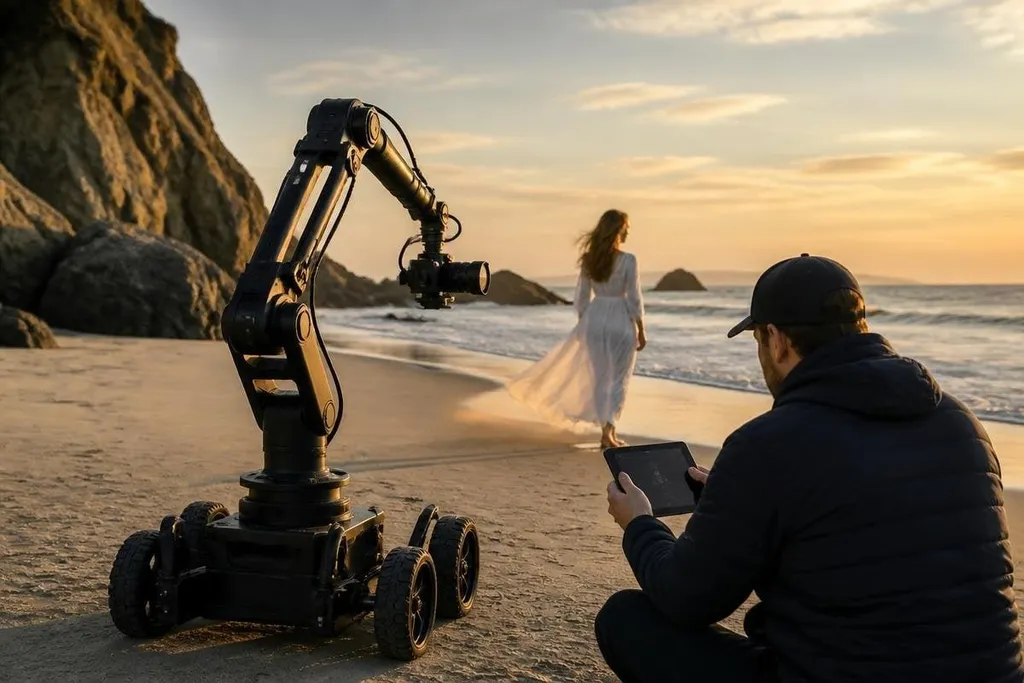
A robotic camera can now do more than hold a lens and follow a preset path. It can read the scene, choose what deserves focus, and adjust the robot’s movement while the camera works.
For a photographer, that shifts the hard part from operating controls to setting rules. The system still needs a clear subject, safe movement limits, and a person who can judge the final image.
Quick read
- It can guide focus, exposure, framing, and camera movement.
- A robot can repeat the same shot while changing one setting at a time.
- Human review still matters when lighting, motion, or safety conditions change.
What AI adds to the camera rig
A robotic photography system usually joins a camera, a motorized mount, sensors, and control software. The camera creates the image, while the robot handles position, angle, height, or motion along a rail.
AI adds a layer that reads image data and turns it into movement or camera settings. It can detect a person, product, face, or moving object, then keep that subject inside a chosen part of the frame.
The system may also estimate depth, which helps it judge how far the subject sits from the lens. That matters during a moving shot.
A fixed script may place the camera correctly at the start and miss the subject after a person turns or an object shifts. A vision model can update the target position during the shot, but its result depends on the scene it can see.
Focus and exposure bring another use. The software can identify the main subject and ask the camera to focus there, while software checks bright and dark areas in the frame. It can then adjust shutter speed, aperture, or ISO within limits set by the operator.
Those limits matter. A photographer may allow the system to change ISO but hold shutter speed steady, because motion blur would damage the shot. The robot follows the rule, while the person remains responsible for the image standard.
Repeatable shots with less manual work
Robotic systems are useful when a team needs the same camera move many times. A product shoot might repeat a slow pan while the lighting, object position, or lens setting changes between takes. The robot can follow the stored path and return to the same start point.
After the shoot, AI may help sort the results. Software may flag frames with closed eyes, missed focus, unwanted movement, or an empty part of the frame. That reduces the number of images a person must inspect, but a flag is a review aid rather than a final decision.
Remote operation lets a photographer set the shot from another location. The robot can then move the camera along a defined path, while a person controls when the take starts and stops. Reports on robotic photography systems from Robot24.com can help you compare that path with the control method and human role before the next section looks at where the setup can fail.
Where the system can fail
AI reads patterns in the image. It doesn't understand every reason a photographer might reject a frame. Reflections can confuse subject detection. Low light can reduce image detail. A fast-moving subject can leave the tracking area before the robot reacts.
Physical limits add another problem. A camera arm has a fixed reach, a maximum load, and a safe speed. A heavy camera body, long lens, or external monitor can change the balance of the rig, so the control software needs the correct weight and position data.
Network delay can also affect remote control. If the video feed arrives late, the operator may see the robot in one position while it has already moved elsewhere. A local stop control and a clear movement boundary matter more than a smooth control screen.
I’d trust AI to repeat a tested camera move before I’d let it choose the whole shot without review.
A practical buying checklist
Before you choose a robotic photography system, check these points:
- Camera support: confirm the mount fits your camera, lens, cables, and battery setup.
- Movement control: check the available pan, tilt, height, rail, or arm motions.
- Subject tracking: test the system with faces, products, reflections, and low light.
- Manual control: find out how quickly a person can stop or take over the robot.
- Repeatability: run the same move several times and compare the frame position.
- Data access: check whether you can export images, settings, logs, and tracking results.
The useful system is the one that keeps its limits visible. AI can remove repeated camera work and help sort a large shoot, while the photographer still sets the rules that protect focus, framing, safety, and image quality. The next step is a test shot with your own camera, lens, lighting, and subject before you pay for a larger rig.